Orders of precedence in China
| This article is part of a series on the |
| Politics of China |
|---|
 |
Leadership
|
Communist Party
|
United Front
|
Ideology
|
|
Legislative
|
Presidency
|
Executive
|
Military
|
Supervision
|
|
Publicity
|
|
Cross-Strait relations
|
Foreign relations
|
Related topics
|
|
 People's Liberation Army
 People's Armed Police
 China Coast Guard
.mw-parser-output .nobold{font-weight:normal} Part of a series on the Orders of precedence |
|---|
 United States United States |


 Poland-Lithuania (hist.)


The Orders of precedence in China is the ranking of political leaders in China for the purposes of event protocol and to arrange the ordering of names in official news bulletins, both written and televised. It is also sometimes used to assess perceived level of political power. Although there is no formally published ranking, there is usually an established convention and protocol, and the relative positions of Chinese political figures can usually be deduced from the order in meetings and especially by the time and order in which figures are covered by the official media.
Depending on the person and the time period, the hierarchy will vary accordingly. Since the 1980s, Chinese political positions have become increasingly institutionalized. However, part of the power of Chinese leaders carry still derive from who they are, rather than what position they hold.
Individuals can hold multiple top leadership titles but also be unable to claim to be the de facto ruler as was the case with Chairman Hua Guofeng, when "paramount leader" Deng Xiaoping was present. The traditional ranking system was based upon the hierarchical line of the politburo standing committee. The names on this list includes all those officially considered "Party and State Leaders" (Chinese: 党和国家领导人).
Contents
1 Order of precedence
1.1 Applications of protocol
1.2 Order of institutions
1.3 Order of leaders
1.3.1 Order of names in official news
1.3.2 Order of seats
1.4 National Leaders
1.5 Wang Qishan
1.6 Other members of the CPC Politburo
1.7 Living former members of the Politburo Standing Committee
1.8 Members of the Secretariat of the Communist Party of China
1.9 Vice-Chairpersons of the National People's Congress Standing Committee
1.10 State Councilors and Judiciary Chiefs
1.11 Vice-chairpersons of the CPPCC National Committee
1.12 Members of the Central Military Commission
2 Rankings below the National Leadership
2.1 Local Party Committee rankings
3 See also
4 Notes
5 References
Order of precedence
Applications of protocol
The Order of Precedence has gradually become normalized as the institutions of the Communist Party and the People's Republic became more established and stable. Internal publications and official media adhere to strict ranking protocol when reporting news items or public announcements that involve multiple leaders. Similarly, the order is strictly adhered to when seating leaders at official meetings and functions.
Often, state media news programs, such as Xinwen Lianbo, overlook the actual importance of the story attached to each leader. Rather the news order is determined by political ranking alone. For instance, if a higher-ranked leader is chairing a routine meeting, while a lower-ranked leader is visiting an earthquake disaster zone, the routine meeting will take precedence over the disaster in the order that they are reported.
Protocol ordering of leaders is perhaps most visible at large gatherings of party and state leaders, such as Party Congresses, National People's Congresses, the funeral or memorial service of former leaders, or major anniversary celebrations.
The current order of precedence applies to party, state, and military leaders. It generally follows an order set out by the institutions to which these leaders belong; further ranking of individual leaders are applied within each of the institutions. Where an individual belongs to numerous party and state institutions, they are usually only mentioned on first instance for their highest-ranking post.
Order of institutions
The organs of the party, state, and military, have a generally applied rank order, as follows:
Central Committee of the Communist Party of China
- Central Politburo
- Central Secretariat
- Central Government of the People's Republic of China (excluding the military and judicial organs)
- Standing Committee of the National People's Congress
- Presidency
- State Council
- The National Committee of the Chinese People's Political Consultative Conference (CPPCC)
Central Military Commission (CMC)
- CMC of the Communist Party of China
- CMC of the People's Republic of China
- Central Commission for Discipline Inspection of the Communist Party of China
- Highest judicial organs
- Supreme People's Court
- Supreme People's Procuratorate
Order of leaders
Order of names in official news
- Current members of the CPC Central Politburo Standing Committee, normally including:
- General Secretary of the CPC Central Committee
- President of the People's Republic of China
- Premier of the State Council
- Chairperson of the NPC Standing Committee
- Chairperson of the CPPCC National Committee
- Chairman of the Central Military Commission
- Other members of the Politburo Standing Committee, normally including:
- First-ranked Secretary of the CPC Central Secretariat
- Secretary of the Central Commission for Discipline Inspection
- First-ranked (Senior) Vice Premier of the
State Council
- First-ranked Secretary of the CPC Central Secretariat
- Former General Secretary of the CPC Central Committee
- Other current members of the Politburo, normally including:
- Vice President
- Vice Premiers of the State Council
- Vice Chairman of the Central Military Commission
- Former members of the Central Politburo Standing Committee
- Current Members of the CPC Central Secretariat
- Vice Chairpersons of the National People's Congress Standing Committee
- State Councilors
- President of the Supreme People's Court
- Procurators-General of the Supreme People's Procuratorate
Vice Chairpersons of the CPPCC National Committee, at the bottom of the list of the current national-level "Leaders of the Party and the State" (党和国家领导人)- Retired "Leaders of the Party and the State", except former members of the Politburo Standing Committee, ranked by the highest office they held, repeating the same order above.
- Central Military Commission members except chairpersons and vice-chairpersons are not considered national-level "Leaders of the Party and State" but merely leaders of the People's Liberation Army, and generally listed separately by protocol.
- Current CMC members (except chairpersons and vice-chairpersons)
- Former CMC members (except chairpersons and vice-chairpersons)
- Provincial-ministerial level officials
Order of seats
- Current General Secretary of the CPC Central Committee
- Former General Secretary of the CPC Central Committee
- Current members of the CPC Central Politburo Standing Committee except General Secretary, normally including:
- President of the People's Republic of China
- Premier of the State Council
- Chairperson of the NPC Standing Committee
- Chairperson of the CPPCC National Committee
- Chairman of the Central Military Commission
- Other members of the Politburo Standing Committee, normally including:
- First-ranked Secretary of the CPC Central Secretariat
- Secretary of the Central Commission for Discipline Inspection
- First-ranked (Senior) Vice Premier of the
State Council
- First-ranked Secretary of the CPC Central Secretariat
- Former members of the Central Politburo Standing Committee except former General Secretary
- Other current members of the Politburo, normally including:
- Vice President
- Vice Premiers of the State Council
- Vice Chairman of the Central Military Commission
- Current Members of the CPC Central Secretariat
- Vice Chairpersons of the National People's Congress Standing Committee
- State Councilors
- President of the Supreme People's Court
- Procurators-General of the Supreme People's Procuratorate
Vice Chairpersons of the CPPCC National Committee, at the bottom of the list of the current national-level "Leaders of the Party and the State" (党和国家领导人)- Retired "Leaders of the Party and the State", except former members of the Politburo Standing Committee, ranked by the highest office they held, repeating the same order above.
- Central Military Commission members except chairpersons and vice-chairpersons are not considered national-level "Leaders of the Party and State" but merely leaders of the People's Liberation Army.
- Current CMC members (except chairpersons and vice-chairpersons)
- Former CMC members (except chairpersons and vice-chairpersons)
- Provincial-ministerial level officials
NB:
- The ranking of a Vice President of the PRC is normally based on whether he is a current or former Politburo Standing Committee member or other member of the Politburo.Press coverage of the March 2018 National People's Congress ranked the new Vice President Wang Qishan immediately after the Standing Committee,from which he recently retired.
National Leaders
National leaders are ranked based on the offices they hold, their seniority, or sometimes simply their perceived personal prestige. During the Mao years, ranking of leaders was fairly arbitrary. For instance, during the Cultural Revolution, Mao himself dictated the exact protocol sequence depending on who was held in favour at the time.[a]
Since 1982, rankings gradually stabilized and more consistent patterns could be observed. For instance, the General Secretary of the Communist Party of China always ranked first in the protocol sequence. This is despite the fact that some General Secretaries were not the pre-eminent political leaders. For example, General Secretaries Hu Yaobang and Zhao Ziyang (both ranked first) were, in practice, subordinate to "paramount leader" Deng Xiaoping, who was ranked behind them in protocol. Deng at the time served as Chairman of the Central Military Commission and was ranked second overall in the leadership hierarchy.
The President is a largely ceremonial post, but it is typically ranked immediately after the General Secretary and before other offices of the state.[b] When the President and General Secretary are two different people (prior to 1993, and in brief interregnums in 2003 and 2013), the President is ranked second to the General Secretary. Between 1982 and 1987, the President ranked after the Premier.[c]
After the President, the Chairman of the Standing Committee of the National People's Congress, the Premier, and the Chairman of the National Committee of the Chinese People's Political Consultative Conference follow; this ordering seems to supersede the Standing Committee order when officeholders are not themselves part of the Standing Committee, although typically since 1993 the heads of the "four national bodies" are concurrently members of the Standing Committee. Between 1997 and 2002, NPC Chair Li Peng was ranked second. During the same period, the Premier, Zhu Rongji, as head of government, was ranked third. The Chairman of the National Committee of the Chinese People's Political Consultative Conference (CPPCC) was ranked fourth. This ordering remained consistent between 2002 and 2012, when NPC Chair Wu Bangguo ranked above Premier Wen Jiabao. However, in 2013, this ordering changed. The Premier, Li Keqiang, was ranked 2nd, immediately after the General Secretary, and in front of the NPC Chairman Zhang Dejiang.
The Politburo Standing Committee of the Communist Party of China, colloquially called the Zhengzhiju Changweihui in Chinese, is the apex of political power in China. Its members (Zhengzhiju Changwei) are strictly ranked. The heads of the four national bodies typically occupy the top four ranking spots of the Standing Committee. The other members of the Standing Committee are ranked immediately after them. The rankings of the remaining Standing Committee members are determined by a combination of the offices they hold and their seniority. For example, Li Changchun served as a Standing Committee member with no strictly defined office between 2002 and 2012; between 2002 and 2007, he was ranked eighth in protocol sequence, but in 2007, having now served one term on the body, his rank rose to fifth, immediately after CPPCC chair Jia Qinglin and in front of putative successor and executive secretary of the Secretariat Xi Jinping.
The current ranking of the Politburo Standing Committee is as follows:
| № | Portrait | Information | Party position(s) | State position(s) | |
|---|---|---|---|---|---|
1st |  | Name | Xi Jinping | General Secretary of the Communist Party of China Chairman of the Central Military Commission of CPC | President of the People's Republic of China Chairman of the Central Military Commission of PRC |
| Birthplace | Beijing | ||||
NPC Constituency | Inner Mongolia at-large | ||||
| Member since | 22 October 2007 | ||||
2nd |  | Name | Li Keqiang | Party Secretary of the State Council of the People's Republic of China | Premier of the People's Republic of China |
| Birthplace | Hefei, Anhui | ||||
NPC Constituency | Guangxi at-large | ||||
| Member since | 22 October 2007 | ||||
3rd |  | Name | Li Zhanshu | Party Secretary of the Standing Committee of the National People's Congress | Chairman of the Standing Committee of the National People's Congress |
| Birthplace | Pingshan County, Hebei | ||||
NPC Constituency | Jiangxi at-large | ||||
| Member since | 25 October 2017 | ||||
4th |  | Name | Wang Yang | Party Secretary of the Chinese People's Political Consultative Conference | Chairman of the Chinese People's Political Consultative Conference |
| Birthplace | Suzhou, Anhui | ||||
NPC Constituency | Sichuan at-large | ||||
| Member since | 25 October 2017 | ||||
5th |  | Name | Wang Huning | Top-ranked Secretary of the Central Secretariat of the CPC | |
| Birthplace | Shanghai | ||||
NPC Constituency | Hebei at-large | ||||
| Member since | 25 October 2017 | ||||
6th | Name | Zhao Leji | Secretary of the Central Commission for Discipline Inspection | ||
| Birthplace | Xining, Qinghai | ||||
NPC Constituency | Heilongjiang at-large | ||||
| Member since | 25 October 2017 | ||||
7th |  | Name | Han Zheng | Deputy Party Secretary of the State Council of the People's Republic of China | First Vice Premier of the People's Republic of China |
| Birthplace | Shanghai | ||||
NPC Constituency | Shaanxi at-large | ||||
| Member since | 25 October 2017 | ||||
Wang Qishan
Since 2018, Vice President Wang Qishan, himself a former member of the Politburo Standing Committee, has been placed in front of the other members of the Politburo and in front of former leaders, and immediately after the sitting Politburo Standing Committee members.
Other members of the CPC Politburo
From its early history, the Politburo was theoretically a "leadership collective", with equal status accorded to each of its members. In practice, the Politburo Standing Committee members have elevated status within the body and are considered its most important and powerful members. When a new Politburo member list is first announced, or when the Politburo membership is being reported independently of other bodies, it is ordered by "the number of strokes in the surname character", a traditional method of 'alphabetization' of Chinese names; in these cases, all Politburo members, including PSC members, are named in this sequence. Unlike the PSC, Politburo members are not ranked based on presumed level of power. When it comes to seating protocol and official announcements about the Politburo in conjunction with other party and state bodies, the Politburo Standing Committee members are announced first, before the rest of the Politburo members.
The members of the Politburo Standing Committee are also Politburo members; since they are already named above, they are omitted from this list
Ding Xuexiang, Chief of the General Office of the Communist Party of China, effectively Xi's chief of staff
Wang Chen, Secretary-General of the National People's Congress- Liu He
Xu Qiliang, Vice chairman of the Central Military Commission- Sun Chunlan
Li Xi, party chief of Guangdong
Li Qiang, party chief of Shanghai
Li Hongzhong, party chief of Tianjin- Yang Jiechi
Yang Xiaodu, Deputy Secretary of the Central Commission for Discipline Inspection
Zhang Youxia, Vice Chairman of the Central Military Commission
Chen Xi, head of the Central Organization Department
Chen Quanguo, party chief of Xinjiang
Chen Min'er, party chief of Chongqing- Hu Chunhua
Guo Shengkun, Secretary of the Political and Legal Affairs Commission
Huang Kunming, head of the Central Propaganda Department
Cai Qi, party chief of Beijing
Living former members of the Politburo Standing Committee
Immediately following the 16th Party Congress, Jiang Zemin was ranked 2nd overall on the leadership protocol hierarchy, immediately after Hu Jintao. At the conclusion of the 18th Party Congress, when Hu Jintao retired as General Secretary, Jiang was ranked 2nd overall, after Xi Jinping, and Hu Jintao was ranked 3rd, after Jiang. Since 2013, judging mostly based on the official obituary notices of various deceased party officials, Jiang and Hu seemed to have progressively moved "lower" on the protocol strata, first below all current members of the Politburo Standing Committee, and as of 2014, behind all members of the sitting Politburo.[1]
At major functions, Jiang and Hu sat immediately next to Xi Jinping, visually giving them prominence over the other Politburo Standing Committee members on television footage. However, in the official bulletins of the functions, the names of Jiang and Hu were announced after all sitting members of the Politburo. This convention was used at the National Day banquet held on September 30, 2014,[2] the 2015 China Victory Day Parade atop Tiananmen Gate, and the opening session of the 19th Party Congress in October 2017.[3]
It should be noted that former Politburo Standing Committee members who were not "in good standing" in official party evaluations are not included in this list; this includes those ousted from positions of power but not formally expelled from the party. For instance, Zhao Ziyang and Hua Guofeng were typically omitted from this list when they were alive. Zhou Yongkang, who was convicted on corruption charges in 2015, was also removed from this list.
Ranking based on official order of news announcements for the opening session of the 19th National Congress of the Communist Party of China on October 17, 2017[4]
| Name | Image | Born | Joined Party | Former highest post(s) | Retired |
|---|---|---|---|---|---|
Jiang Zemin |  | 1926 | 1946 | General Secretary of the Communist Party of China President of the People's Republic of China Chairman of the Central Military Commission | 2005 |
Hu Jintao | 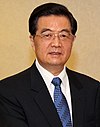 | 1942 | 1964 | General Secretary of the Communist Party of China President of the People's Republic of China Chairman of the Central Military Commission | 2013 |
Li Peng | 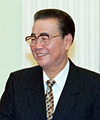 | 1928 | 1945 | Member of the CPC Politburo Standing Committee Premier of the People's Republic of China Chairman of the NPC Standing Committee | 2003 |
Zhu Rongji | 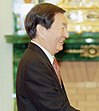 | 1928 | 1949 | Member of the CPC Politburo Standing Committee Premier of the People's Republic of China | 2003 |
Li Ruihuan |  | 1934 | 1959 | Member of the CPC Politburo Standing Committee Chairman of the CPPCC National Committee | 2003 |
Wu Bangguo | 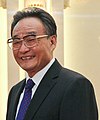 | 1941 | 1964 | Member of the CPC Politburo Standing Committee Chairman of the NPC Standing Committee | 2013 |
Wen Jiabao |  | 1942 | 1965 | Member of the CPC Politburo Standing Committee Premier of the People's Republic of China | 2013 |
Jia Qinglin | 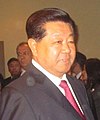 | 1940 | 1959 | Member of the CPC Politburo Standing Committee Chairman of the CPPCC National Committee | 2013 |
Zhang Dejiang | 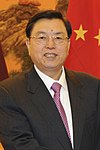 | 1946 | 1971 | Member of the CPC Politburo Standing Committee Chairman of the NPC Standing Committee | 2018 |
Yu Zhengsheng |  | 1945 | 1964 | Member of the CPC Politburo Standing Committee Chairman of the CPPCC National Committee | 2018 |
Song Ping | 1917 | 1937 | Member of the CPC Politburo Standing Committee | 1992 | |
Li Lanqing | 1932 | 1952 | Member of the CPC Politburo Standing Committee Vice Premier of the People's Republic of China | 2003 | |
Zeng Qinghong | 1939 | 1960 | Member of the CPC Politburo Standing Committee First Secretary of the CPC Central Secretariat Vice President of the People's Republic of China | 2008 | |
Wu Guanzheng | 1938 | 1962 | Member of the CPC Politburo Standing Committee Secretary of the CPC Central Commission for Discipline Inspection | 2007 | |
Li Changchun | 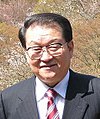 | 1944 | 1965 | Member of the CPC Politburo Standing Committee | 2012 |
Luo Gan | 1935 | 1960 | Member of the CPC Politburo Standing Committee Secretary of the CPC Central Political and Legislative Affairs Committee | 2007 | |
He Guoqiang | 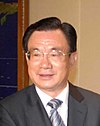 | 1943 | 1966 | Member of the CPC Politburo Standing Committee Secretary of the CPC Central Commission for Discipline Inspection | 2012 |
Liu Yunshan | 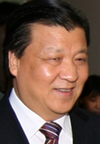 | 1947 | 1971 | Member of the CPC Politburo Standing Committee | 2017 |
Zhang Gaoli | 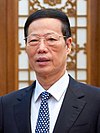 | 1946 | 1973 | Member of the CPC Politburo Standing Committee Vice Premier of the People's Republic of China | 2018 |
Members of the Secretariat of the Communist Party of China
All members of the Secretariat are concurrently members of the Politburo so they have already been listed above; the only Secretary of the Secretariat that does not hold Politburo membership is You Quan
You Quan, head of the Central United Front Department
Vice-Chairpersons of the National People's Congress Standing Committee
Wang Chen, already mentioned as a member of the Politburo- Cao Jianming
- Zhang Chunxian
- Shen Yueyue
- Ji Bingxuan
- Arken Imirbaki
- Wan Exiang
- Chen Zhu
- Wang Dongming
- Padma Choling
- Ding Zhongli
- Hao Mingjin
- Cai Dafeng
- Wu Weihua
State Councilors and Judiciary Chiefs
State Councilors: Wei Fenghe, Wang Yong, Wang Yi, Xiao Jie, Zhao Kezhi (in order of rank)- Chief Justice of the Supreme People's Court (Zhou Qiang)
Procurator-General of the Supreme People's Procuratorate (Zhang Jun)
Vice-chairpersons of the CPPCC National Committee
In the following order:
- Zhang Qingli
- Liu Qibao
- Pagbalha Geleg Namgyai
- Tung Chee-hwa
- Wan Gang
- Edmund Ho
- Lu Zhangong
- Wang Zhengwei
- Ma Biao
- Chen Xiaoguang
- Leung Chun-ying
Xia Baolong (secretary-general)- Yang Chuantang
- Li Bin
- Bagatur
- Wang Yongqing
- He Lifeng
- Su Hui
- Zheng Jianbang
- Gu Shengzu
- Liu Xincheng
- He Wei
- Shao Hong
- Gao Yunlong
Members of the Central Military Commission
- Wei Fenghe
- Li Zuocheng
- Miao Hua
- Zhang Shengmin
Rankings below the National Leadership
Within the People's Republic of China, there is a statutory "National Civil Service Rankings System" to determine ranking of officials below the minister-level, stretching from the very important positions (Provincial Party Secretaries, for instance) to the lowest positions (for example, someone who is responsible for a township office). Their relative ranking determines their annual salary, living stipends, entitlement to official residences and vehicles, pensions, benefits, and so forth. Provincial leaders do not enjoy an elevated protocol rank in their own province of jurisdiction. Rather they must still be placed behind all national leaders listed above.
For the purposes of protocol rankings, the heads of national ministries technically hold the same rank as provincial governors. Therefore, they do not qualify as "national leaders". Departmental heads of the Communist Party of China, and ministers of the State Council are both called bùzhǎng (部长; literally "Head of Department"). However, many Communist Party Department heads, such as heads of the Organization and Propaganda departments, almost always hold seats on the Politburo, and thus are ranked as "national leaders". Ministers of central government departments rarely hold Politburo seats.[d] When all else is equal, the party department heads rank above state department heads; for example, the head of the Communist Party's International Liaison Department will always rank ahead of the Minister of Foreign Affairs if they appear in the same function. In a similar vein, the provincial Party Secretary will always rank above the provincial Governor.
The hierarchy of party vs. state positions is strictly adhered to for official protocol, demonstrating the 'vanguard' status of the Communist Party in Chinese politics. Generally, party positions are treated with more prestige than state positions of an equal level, but technically the official civil service privileges are the same for party and state officials of the same administrative level.[5]
Local Party Committee rankings
A Party Committee is the de facto highest ruling council of any given jurisdiction in the PRC, except for the Special Administrative Regions of Hong Kong and Macau.
In provincial, municipal, and other local-level protocol rankings, the four main institutions generally follow the ranking of:
- Party Secretary
- Chief of Government (Governor, usually a Deputy Secretary)
- People's Congress Chair
- People's Political Consultative Conference Chair
Provincial party standing committees are powerful bodies whose membership is vetted directly by the Organization Department of the Communist Party of China based on the nomenklatura system. The members of these bodies are generally ranked by date of accession to sub-provincial rank, although in practice there appears to be some variation to this rule.
See also
- Politics of China
- Generations of Chinese leadership
List of political parties in China#Institutional minor parties. There is an order of precedence among the eight institutional minor parties.
Notes
^ At the 11th Plenum of the 8th Central Committee in 1966, for example, Liu Shaoqi was demoted from second to eighth on the party hierarchy on personal orders from Mao, but retained the office of state president.
^ See for example the rankings of national leaders during the memorial ceremony of the Panchen Lama held in 1989; at this event, the ordering of leaders was Zhao Ziyang (as General Secretary), Yang Shangkun (as President), Li Peng (as Premier), Wan Li (as NPC Chair), Li Xiannian (as CPPCC chair), Qiao Shi (as a member of the Politburo Standing Committee).
^ For example, at the funeral of Ye Jianying in 1986, the order of leaders appeared as Hu Yaobang (as General Secretary), Deng Xiaoping (as CMC Chair), Zhao Ziyang (as Premier), Li Xiannian (as President), Chen Yun.
^ Perhaps a notable exception is Zhou Yongkang, who held a seat on the Politburo as Minister of Public Security between 2002 and 2007.
References
^ "胡錦濤遭"降級" 排名跌至政治局委員外". Duowei News. September 8, 2014..mw-parser-output cite.citation{font-style:inherit}.mw-parser-output q{quotes:"""""""'""'"}.mw-parser-output code.cs1-code{color:inherit;background:inherit;border:inherit;padding:inherit}.mw-parser-output .cs1-lock-free a{background:url("//upload.wikimedia.org/wikipedia/commons/thumb/6/65/Lock-green.svg/9px-Lock-green.svg.png")no-repeat;background-position:right .1em center}.mw-parser-output .cs1-lock-limited a,.mw-parser-output .cs1-lock-registration a{background:url("//upload.wikimedia.org/wikipedia/commons/thumb/d/d6/Lock-gray-alt-2.svg/9px-Lock-gray-alt-2.svg.png")no-repeat;background-position:right .1em center}.mw-parser-output .cs1-lock-subscription a{background:url("//upload.wikimedia.org/wikipedia/commons/thumb/a/aa/Lock-red-alt-2.svg/9px-Lock-red-alt-2.svg.png")no-repeat;background-position:right .1em center}.mw-parser-output .cs1-subscription,.mw-parser-output .cs1-registration{color:#555}.mw-parser-output .cs1-subscription span,.mw-parser-output .cs1-registration span{border-bottom:1px dotted;cursor:help}.mw-parser-output .cs1-hidden-error{display:none;font-size:100%}.mw-parser-output .cs1-visible-error{font-size:100%}.mw-parser-output .cs1-subscription,.mw-parser-output .cs1-registration,.mw-parser-output .cs1-format{font-size:95%}.mw-parser-output .cs1-kern-left,.mw-parser-output .cs1-kern-wl-left{padding-left:0.2em}.mw-parser-output .cs1-kern-right,.mw-parser-output .cs1-kern-wl-right{padding-right:0.2em}
^ "A Rare Glimpse into China's Second Black Box—the Powerful Elders". tiananmenstremendousachievements.wordpress.com. Retrieved 20 October 2014.
^ Xinwen Lianbo, CCTV, September 3, 2015
^ "十九大主席团常务委员会成员名单公布". IFeng. October 17, 2017.
^ "中共中央办公厅、国务院办公厅关于新任副部长、副省长以上干部生活待遇的几项暂行规定--中国共产党新闻--中国共产党新闻网". cpc.people.com.cn.

