Important Cultural Property (Japan)

Sankei-en's Rinshunkaku in Yokohama is a nationally designated Important Cultural Property
An Important Cultural Property (重要文化財, jūyō bunkazai)[note 1] is an item officially classified as Tangible Cultural Property by the Agency for Cultural Affairs and judged to be of particular importance to the Japanese people.[1]
Contents
1 Classification of Cultural Properties
2 Some Important Cultural Properties of Japan
3 Lists of Important Cultural Properties of Japan
4 See also
5 Notes
6 References
7 External links
Classification of Cultural Properties
To protect Japan's cultural heritage the Law for the Protection of Cultural Properties was created as a "designation system" (指定制度) under which important items are appropriated as Cultural Properties,[note 2] thus imposing restrictions to their alteration, repair and export.[1] Besides the "designation system", there exists a "registration system" (登録制度), which guarantees a lower level of protection and support to Registered Cultural Properties.
Cultural Properties are classified according to their nature. Items designated as Tangible Cultural Properties (as opposed to Intangible Cultural Properties), cultural products of high historical or artistic value such as structures, paintings, sculptures, handicrafts, calligraphic works, ancient books, historic documents, archeological artifacts and other such items, can later, if they satisfy certain criteria, be designated either Important Cultural Properties or National Treasures (国宝), for especially valuable items. The designation can take place at the city (市定重要文化財, city designated Important Cultural Property), prefectural (県定重要文化財, prefecturally designated Important Cultural Property) or national (国定重要文化財, nationally designated Important Cultural Property) level. In this last case the designating agency is often not specified. Varying levels of designation can coexist. For example, Sankei-en, a traditional Japanese-style garden in Naka Ward, Yokohama, is both city and nationally designated as an Important Cultural Properties.[2]
Some Important Cultural Properties of Japan
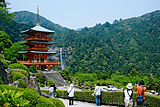
Seiganto-ji, Wakayama Prefecture
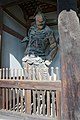
A Niō at Hōryū-ji, Nara
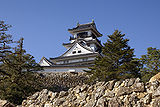
Kōchi Castle, Kōchi Prefecture

Nihon Bridge in Nihonbashi, Tokyo
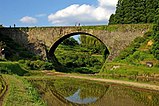
Tsūjun Bridge, Kumamoto Prefecture

Holy Resurrection Cathedral in Tokyo

The Former Hokkaidō government office building
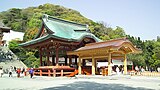
Tsurugaoka Hachiman-gū in Kamakura, Kanagawa prefecture

Meiji Seimei Kan in Tokyo


Lists of Important Cultural Properties of Japan
- List of Important Cultural Properties of Japan (Asuka period: structures)
- List of Important Cultural Properties of Japan (Nara period: structures)
- List of Important Cultural Properties of Japan (Heian period: structures)
- List of Important Cultural Properties of Japan (Kamakura period: structures)
- List of Important Cultural Properties of Japan (Shōwa period: structures)
- List of Important Cultural Properties of Japan (Okinawa: structures)
See also
- Cultural Properties of Japan
Notes
^ The term is often shortened into just jūbun (重文)
^ In this article, capitals indicate an official designation as opposed to a simple, unofficial definition, e.g "Cultural Properties" as opposed to "cultural properties".
References
^ ab "Cultural Properties for Future Generations" (PDF). Administration of Cultural Affairs in Japan ― Fiscal 2009. Agency for Cultural Affairs. June 2007. Archived from the original (PDF) on 2009-03-27..mw-parser-output cite.citation{font-style:inherit}.mw-parser-output q{quotes:"""""""'""'"}.mw-parser-output code.cs1-code{color:inherit;background:inherit;border:inherit;padding:inherit}.mw-parser-output .cs1-lock-free a{background:url("//upload.wikimedia.org/wikipedia/commons/thumb/6/65/Lock-green.svg/9px-Lock-green.svg.png")no-repeat;background-position:right .1em center}.mw-parser-output .cs1-lock-limited a,.mw-parser-output .cs1-lock-registration a{background:url("//upload.wikimedia.org/wikipedia/commons/thumb/d/d6/Lock-gray-alt-2.svg/9px-Lock-gray-alt-2.svg.png")no-repeat;background-position:right .1em center}.mw-parser-output .cs1-lock-subscription a{background:url("//upload.wikimedia.org/wikipedia/commons/thumb/a/aa/Lock-red-alt-2.svg/9px-Lock-red-alt-2.svg.png")no-repeat;background-position:right .1em center}.mw-parser-output .cs1-subscription,.mw-parser-output .cs1-registration{color:#555}.mw-parser-output .cs1-subscription span,.mw-parser-output .cs1-registration span{border-bottom:1px dotted;cursor:help}.mw-parser-output .cs1-hidden-error{display:none;font-size:100%}.mw-parser-output .cs1-visible-error{font-size:100%}.mw-parser-output .cs1-subscription,.mw-parser-output .cs1-registration,.mw-parser-output .cs1-format{font-size:95%}.mw-parser-output .cs1-kern-left,.mw-parser-output .cs1-kern-wl-left{padding-left:0.2em}.mw-parser-output .cs1-kern-right,.mw-parser-output .cs1-kern-wl-right{padding-right:0.2em}
^ Yokohama Sankei Garden, Sankei-en's official site accessed on November 3, 2009 (in Japanese)
External links
 | Wikimedia Commons has media related to Important Cultural Property of Japan. |
Authority control  |
|
|---|

