Fourth Republic of Korea
Republic of Korea .mw-parser-output .nobold{font-weight:normal} 대한민국 大韓民國 | |||||||||
|---|---|---|---|---|---|---|---|---|---|
| 1972–1981 | |||||||||
 Flag  Coat of arms | |||||||||
Anthem: 애국가 "Aegukga" | |||||||||
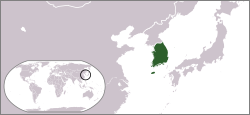 | |||||||||
| Capital | Seoul | ||||||||
| Common languages | Korean | ||||||||
| Government | Authoritarian republic | ||||||||
• 1972–1979 | Park Chung-hee | ||||||||
• 1979–1980 | Choi Kyu-hah | ||||||||
• 1980–1981 | Chun Doo-hwan | ||||||||
| Prime Minister | |||||||||
• 1972–1975 | Kim Jong-pil | ||||||||
• 1975–1979 | Choi Kyu-hah | ||||||||
• 1979–1980 | Shin Hyun-hwak | ||||||||
• 1980–1981 | Nam Duck-woo | ||||||||
| Legislature | National Assembly | ||||||||
| Historical era | Cold War | ||||||||
• Established | 1972 | ||||||||
• Disestablished | March 1981 | ||||||||
| Currency | Korean won | ||||||||
| ISO 3166 code | KR | ||||||||
| |||||||||
| Today part of |  South Korea South Korea | ||||||||

Part of a series on the | ||||||||||||||||||||||
|---|---|---|---|---|---|---|---|---|---|---|---|---|---|---|---|---|---|---|---|---|---|---|
| History of South Korea | ||||||||||||||||||||||
 | ||||||||||||||||||||||
Prelude to Division 1919–48 | ||||||||||||||||||||||
| ||||||||||||||||||||||
First Republic 1948–60 | ||||||||||||||||||||||
| ||||||||||||||||||||||
Second Republic 1960–61 | ||||||||||||||||||||||
| ||||||||||||||||||||||
Constitutional Vacuum 1961–63 | ||||||||||||||||||||||
| ||||||||||||||||||||||
Third Republic 1963–72 | ||||||||||||||||||||||
| ||||||||||||||||||||||
Fourth Republic 1972–81 | ||||||||||||||||||||||
| ||||||||||||||||||||||
Fifth Republic 1981–88 | ||||||||||||||||||||||
| ||||||||||||||||||||||
Sixth Republic 1988–present | ||||||||||||||||||||||
| ||||||||||||||||||||||
 South Korea portal South Korea portal | ||||||||||||||||||||||
The Fourth Republic (Hangul: 제4공화국; Hanja: 第四共和國; RR: Je-sa Gonghwaguk) was the government of South Korea between 1972 and 1981, regulated by the Yusin Constitution adopted in October 1972 and confirmed in a referendum on 21 November 1972. From 1972 to 1979, power was monopolized by Park Chung Hee and his Democratic Republican Party under the highly centralized authoritarian "Yusin System". With the assassination of Park on 26 October 1979, the Republic entered a period of tumult and transition under the short-lived nominal presidency of Choi Kyu-hah, controlled under severe escalating martial law and witnessing the coup d'état of December Twelfth, the violent unfolding of the Gwangju Democratization Movement and its armed suppression, the coup d'état of May Seventeenth and presidency of Chun Doo-hwan, and finally the transition to the Fifth Republic under Chun in 1981.
Contents
1 Economy
2 International relations
3 Yu-shin Constitution
4 Assassination of Park and breakdown
5 See also
6 References
Economy
This period also saw continued dramatic economic growth, following the government's five-year plans. The government invested heavily in heavy industries.
International relations
A variety of events in international diplomacy led the Park regime to reconsider its diplomatic position. Notable were the normalization of U.S. diplomatic relations with the People's Republic of China, which cast doubt on South Korea's ability to count on Cold War backing from the United States. The South Korean government began to establish diplomatic relations with many countries, such as Canada. In addition, the first round of Red Cross talks were held between South Korea and North Korea. Park also announced plans for eventual reunification.
Yu-shin Constitution
| Yusin Constitution | |
| Hangul | 유신 헌법 |
|---|---|
| Hanja | 維新 憲法 |
| Revised Romanization | Yusin Heonbeop |
| McCune–Reischauer | Yusin Hŏnpŏp |
The Fourth Republic was governed under the Yu-shin Constitution, also spelled Yushin. The term Yusin (Hangul: 유신 / Hanja: 維新) in Korean means "rejuvenation" or "renewal", it has the same Chinese root of "restoration" as component of the Japanese 明治維新, Meiji-ishin, meaning Meiji Restoration. The significance of this allusion is in the "imperial" role which scholars have seen attached to the presidency under the Yusin Constitution, which effectively concentrated all governing power in Park's hands.[1]
The 1963 Constitution limited a president to two four-year terms. However, Park won the right to run for a third term in 1969 when the National Assembly, dominated by his allies in the Democratic Republican Party, amended the 1963 constitution to allow the incumbent president — Park himself — to run for three terms. He won a narrow victory over opposition candidate Kim Dae-jung.
Shortly after being sworn in, Park declared a state of emergency "based on the dangerous realities of the international situation." In October 1972, he dissolved the National Assembly and suspended the Constitution. Work was then begun on a new constitution, which was approved in a referendum held on 21 November 1972. Official results showed an implausible 92.3 percent of voters approved the new document.
The document was marked by the enormous powers granted to the president. He was elected for six years, with no limits on reelection. The people elected delegates to the National Conference for Unification, an electoral college that was charged with electing the president. The requirements for candidacy, however, were so stringent that only one candidate could be on the conference's ballot. He was vested with sweeping powers to suspend constitutional freedoms and rule by decree. He also had the right to appoint one-third of the National Assembly, effectively guaranteeing a parliamentary majority. For all intents and purposes, the Yusin Constitution turned Park's presidency into a legal dictatorship.
The provisions of the Yusin Constitution were greeted with widespread but ineffective protest. Park was elected without opposition in 1972 and 1978. It remained in effect until after Park's assassination in 1979.
Assassination of Park and breakdown
The assassination of Park, on 26 October 1979, was a pivotal moment in South Korean history and a portentous one for the Yusin system. Park's Prime Minister, Choi Kyu-hah, assumed power as acting president but was almost immediately marginalized by competing factions in the military. After the declaration of martial law following Park's death, General Jeong Seung-hwa acted as the government's chief administrator and appointed Chun Doo-hwan the same day to lead a Joint Investigation Headquarters.
On 27 October, Chun unilaterally assumed control of the KCIA and the government intelligence apparatus. On 6 December, the National Council for Unification confirmed Choi Kyu-hah as President according to the framework of the Yusin Constitution, but six days later, Chun spearheaded a military coup, forcibly arresting and detaining General Jeong. Choi had lost any meaningful authority in government by then, and Chun installed himself as Director of the KCIA early in 1980.
As growing social unrest came to a head in the Gwangju Democratization Movement, Chun tightened martial law, suppressed protests with troops, and carried out a further self-coup over the course of year. Elected President by the continuing National Council for Unification, Chun progressively dismantled the institutions of the Fourth Republic, dissolving the National Assembly and establishing an emergency national security committee with himself as director. Finally, Chun promulgated a new constitution in 1981, pushing it through a referendum, thereby formally dissolving the Fourth Republic and Park's Yusin system.
See also
- History of South Korea
- History of Korea
- List of Korea-related topics
- October Restoration
References
^ E.g., Kim, B.-K. & Vogel, E. F. (eds.) (2011) The Park Chung Hee Era: The Transformation of South Korea. Harvard University Press, p. 27. However, it is argued in the book that the Yusin Constitution merely formalised rather than directly established the "imperial presidency".

